ServicesTorque & Cleans
Panel Torque & Clean in Kennedale
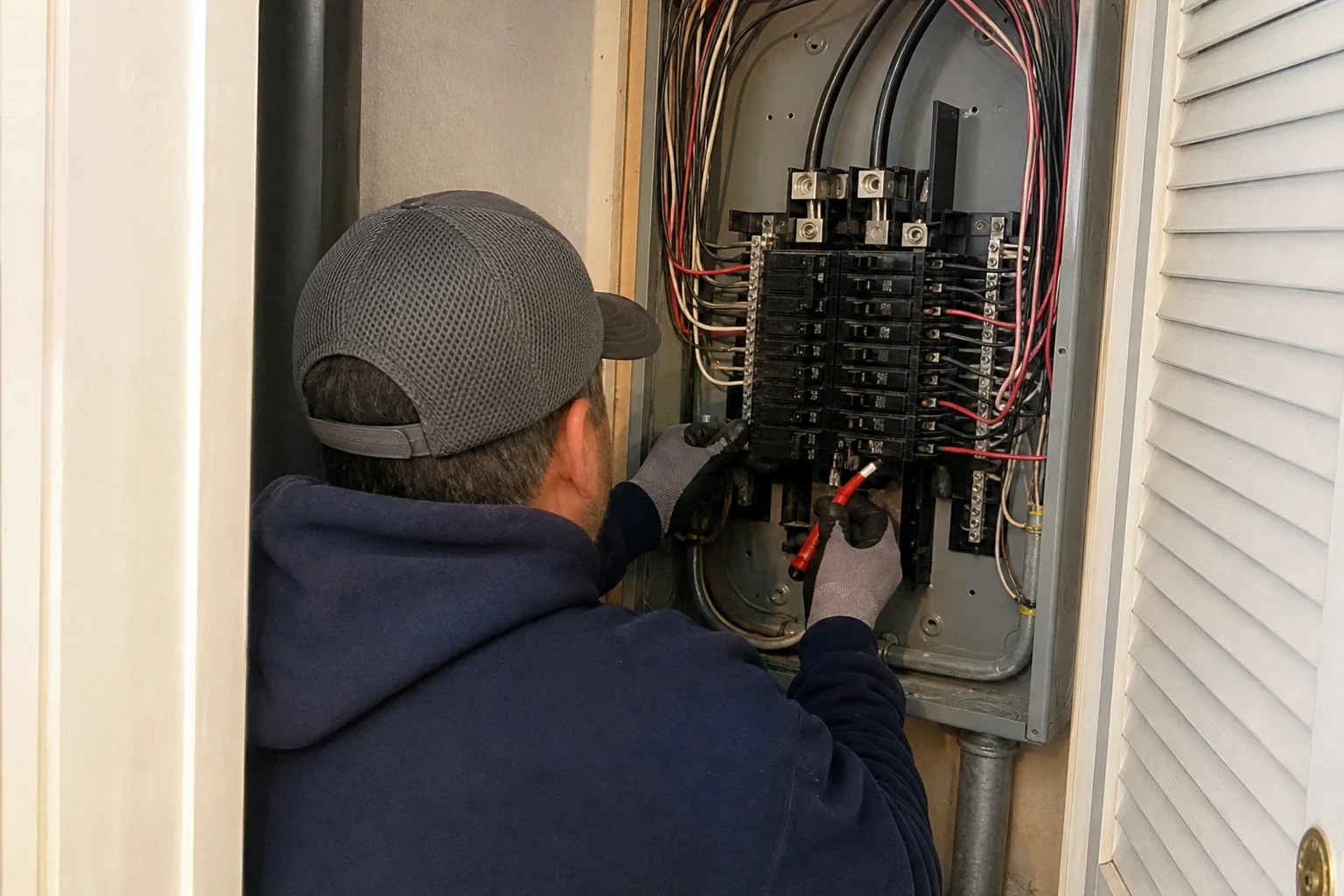
As metal warms and cools, electrical connections slowly work loose. A loose breaker screw or lug heats up well before anything trips. We safely power down your panel, clean it out and tighten every connection to the manufacturer's spec, then walk you through what we found.
What a Torque and Clean Actually Does
Every breaker, neutral bar and main lug in your panel is held by a screw that was set to a specific tightness when it was installed. Over years of load, copper and aluminum expand and shrink a little each day. Screws back off. A connection that is only slightly loose adds resistance, and resistance turns into heat you cannot see from the outside.
A torque and clean is planned maintenance for that problem. We de-energize the panel, vacuum and brush out dust, insects and debris, check every termination for discoloration or corrosion, and retighten each one with a calibrated torque tool to the value printed on the panel label or breaker. Nothing gets cranked down by feel, because overtightening can crush a conductor as easily as undertightening leaves it loose.
It is a good fit if your panel has never been opened since the house was built, if you have added big loads like an EV charger or a new HVAC unit, or if you simply want to know your panel is in good shape before summer.
What the Visit Covers
A plan before the power is cut
We ask what in your home can't be interrupted, such as a fridge, a home office or medical equipment, and schedule the shutdown around it. You'll know how long the outage lasts before anything is switched off.
A thorough cleaning inside the panel
Dust, wasp nests, rodent droppings and drywall grit find their way into panels. We vacuum and brush it all out so heat can escape and nothing conductive rests near live parts.
Tightened to the maker's values
Breaker terminals, neutral and ground bars and the main lugs are retightened with a calibrated torque screwdriver or wrench, using the manufacturer's listed values instead of guesswork.
Every connection inspected
We look for darkened insulation, melted plastic, pitted bus bars, corrosion and aluminum wire that wasn't treated correctly. Anything wrong gets photographed.
A straight report at the end
We tell you plainly what was in good shape, what we tightened and what needs more than maintenance. If a part is worn out we say so, without padding the list.
Clues Your Panel Needs Service
- The cover or a breaker is warm
- A panel should stay close to room temperature. Heat on the cover or one breaker often means a loose or overloaded connection.
- Lights flicker or dip under load
- Lights that dim when the AC or dryer starts can mean a loose neutral or main lug. Have it checked before it gets worse.
- A faint smell of hot plastic or burning
- Any odor near the panel should be looked at soon. Overheating terminations give off that smell long before damage is visible.
- No one has ever serviced the panel
- Most panels sit untouched for decades. If yours is ten or more years old and has never been opened, a baseline check is worthwhile.
- You've added heavy loads
- An EV charger, hot tub or bigger AC unit sends more current through the same connections. Retightening afterward keeps that extra load from exposing weak spots.
- The panel lives in heat or dust
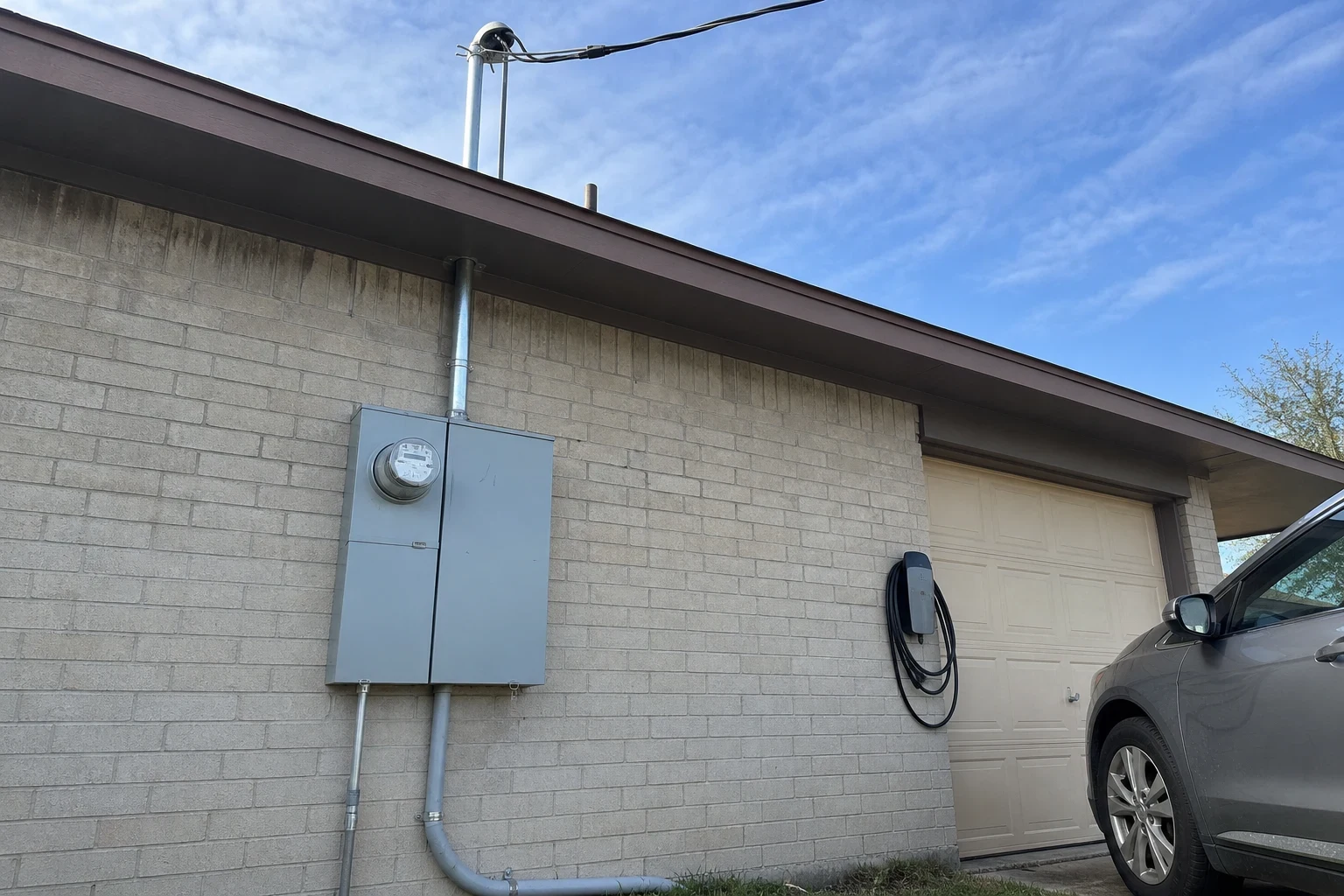
- Panels on sunny exterior walls bake all North Texas summer, and garage panels gather dust quickly. Both speed up the loosening and buildup we clear out.
How the Day Goes
- 1
Plan the shutdown with you
We arrive, look over the panel with the cover on, and agree on timing. If the line side needs to be de-energized, we coordinate with the utility as required.
- 2
Power down and verify
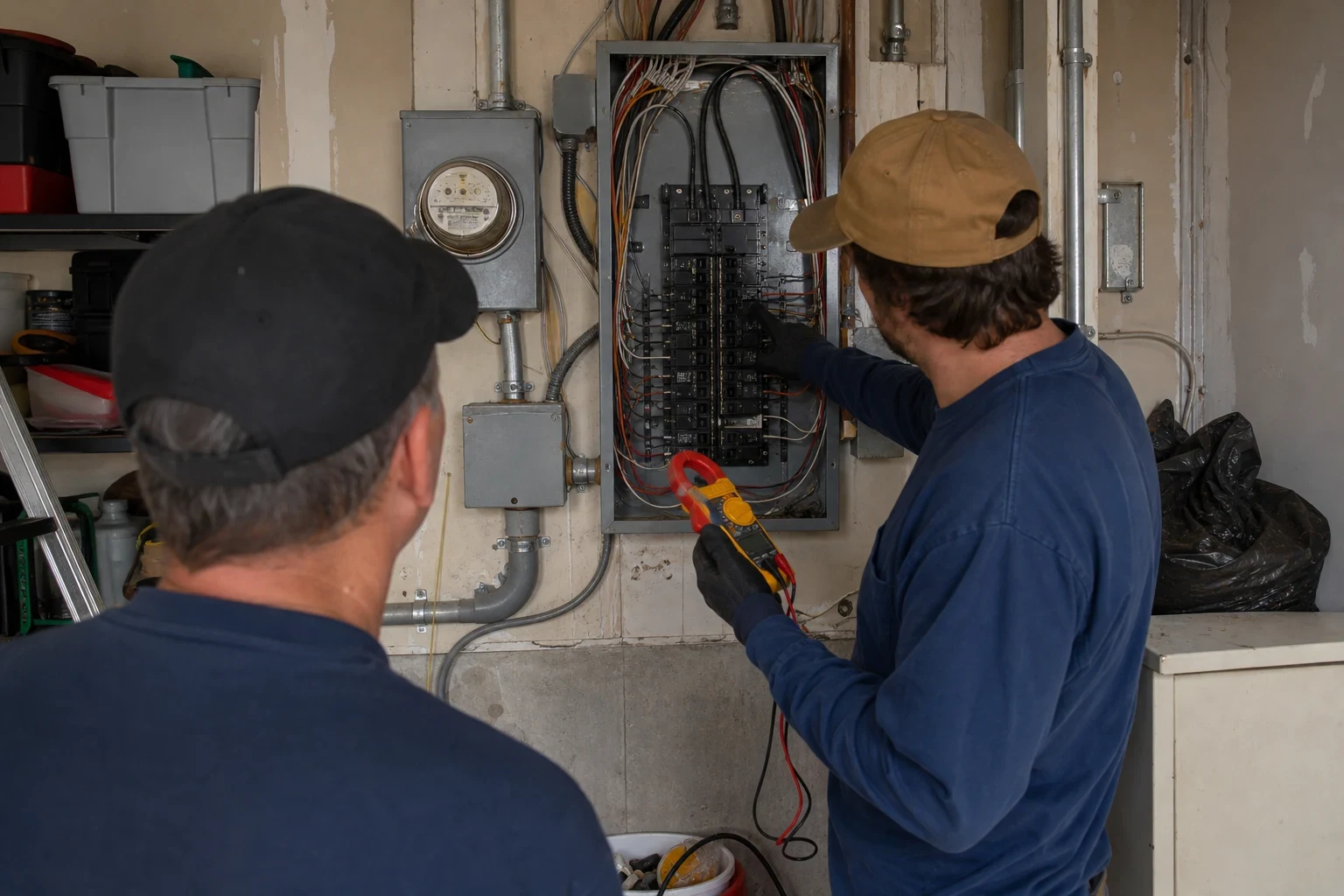
We switch off the main and test with a meter to confirm the panel is dead before any tool goes inside. Your safety and ours comes before speed.
- 3
Clean, inspect, torque
Debris comes out first, then each connection is inspected and tightened to spec. Problem spots are photographed so you can see them yourself.
- 4
Restore power and check
We turn circuits back on one at a time, confirm everything works, and help you spot clocks or devices that need resetting. The area is left as clean as we found it.
What Sets the Price
Most of what you pay for is the time the panel is open, so the price follows how much cleaning and tightening there is. You get the figure by phone or on site before we begin. A part that needs replacing is priced separately, and you approve it first.
- How many panels you have
- A main panel plus a subpanel in the garage or a detached shop takes more time than one panel alone.
- Panel size and breaker count
- More breakers and crowded neutral bars add up to more terminations to check and tighten.
- What's inside
- Heavy dirt, nests or corrosion take extra cleaning time. A clean panel moves quicker.
- Working with the utility
- If the main lugs on the line side have to be shut off, coordinating with the utility can change the timing and cost.
Questions About Torque and Clean Service
- How long will the power be out?
- For one typical panel, expect part of a morning or afternoon. A second panel or heavy buildup takes longer. We give you a time estimate before shutting anything off so you can plan.
- How often does a panel need this?
- Homes have no fixed schedule. Many owners do it once to get a baseline, then again after adding large loads or every several years. If the first visit turns up a lot of loose connections, we'll recommend checking sooner.
- Isn't a home inspection the same thing?
- It isn't. A home inspector typically takes the cover off and looks, but doesn't shut the panel down or tighten anything. A torque and clean is hands-on upkeep done with the panel de-energized.
- What happens if you find a damaged breaker or bus bar?
- We pause, show you the photos and go over your choices. Some fixes fall under Electrical Repair, and a badly worn panel may lead to talking about Panel Upgrades. Nothing past the planned work happens without your approval.
- Could I just tighten the screws on my own?
- Please don't. The main lugs can still be live with the main breaker off, and tightening by hand feel tends to overdo it. The job takes a meter, proper tools and the torque values printed on the label.
Get Your Panel Checked Before It Runs Hot
Tell us a little about your panel and when you can spare a few hours without power. We'll set a time that works for your household and explain what to expect on the day.