ServicesGenerator Service & Repair
Generator Service & Repair in Kennedale
A generator that sits quietly for months can fail the moment the lights go out. We test, maintain and repair standby generators and transfer switches, explain what we find in plain words, and leave your backup power ready to carry your home through the next outage.
Backup power only helps if it starts
Most standby generators run a short exercise cycle each week, and that can hide problems. A unit can idle fine with no load, then stall or trip the moment it has to power your air conditioner, fridge and well pump at once. Batteries weaken, oil breaks down, and connections inside the transfer switch loosen with heat and vibration.
Our generator service and repair covers both halves of the system: the generator itself and the electrical side that hands your home over to it. We look at the whole chain, find what is weak, and tell you whether it needs a simple fix, a part, or nothing at all. If we think a unit is near the end of its useful life, we say so and walk you through the options, including our generator installation service, without pushing.
What a service visit covers
- Battery and charger check
- A tired starting battery is the most common reason a standby unit fails to start. We load-test the battery, clean the terminals and confirm the built-in charger is actually charging.
- Engine fluids and ignition
- Fresh oil and a new oil filter go in, the air filter gets swapped or cleaned, and the plugs are inspected on the schedule your manufacturer sets. Broken-down oil loses its protection and wears the engine during a long outage.
- Transfer switch testing
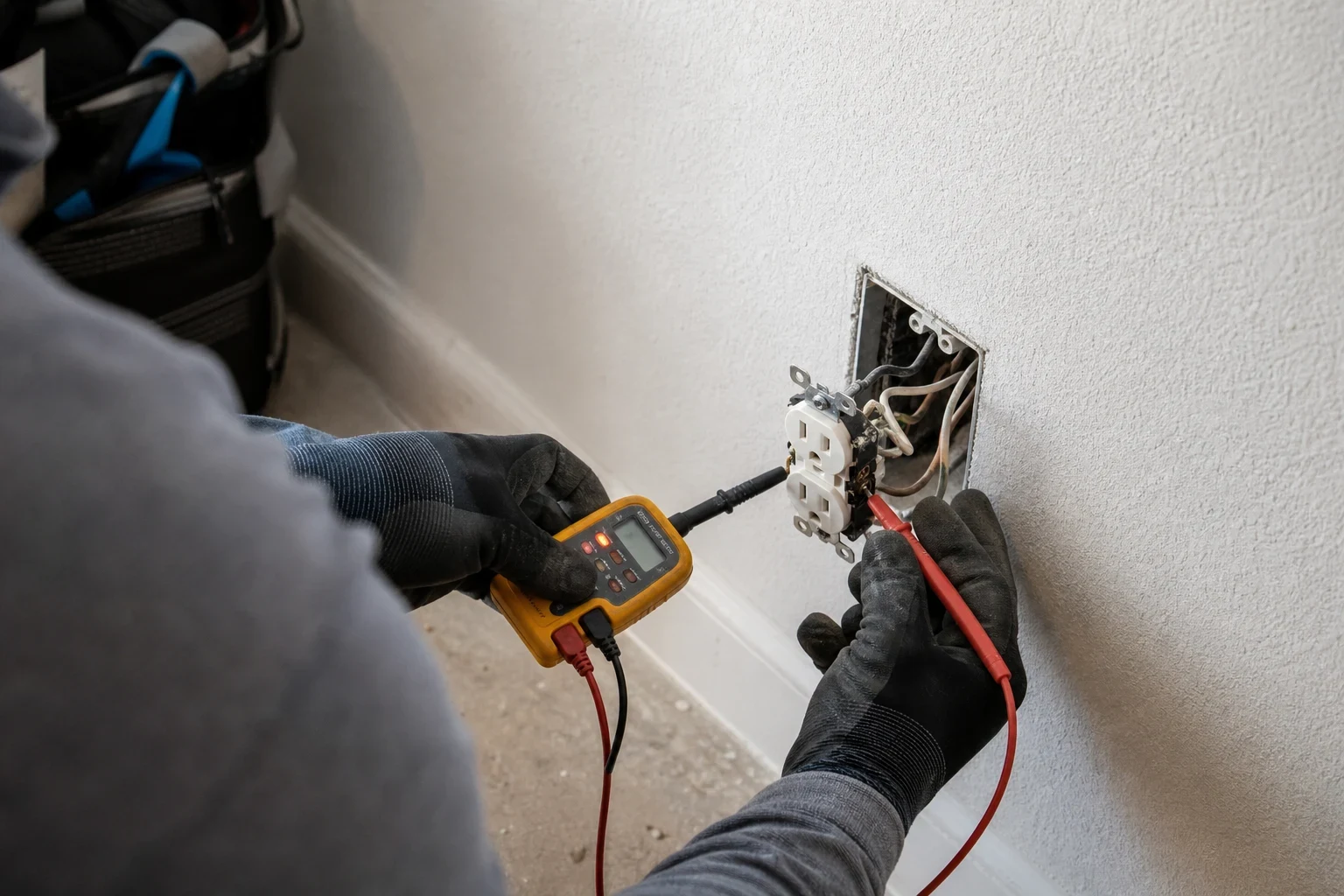
- We simulate a utility outage and watch the automatic transfer switch hand your home over to the generator, then back again. We check contacts, wiring terminations and timing so the switch does its job without hesitation.
- Load test under real demand
- We run the generator with your actual household loads connected, not just at idle. This shows whether it holds voltage and frequency when the big appliances come on.
- Error codes and controller review
- We read the controller's fault history, clear what has been resolved and explain any warnings that point to a deeper issue. You get a short written summary of what we found.
- Repairs on the spot when we can
- Many fixes, like a battery, a loose connection or a failed sensor, can be handled during the visit. If a part has to be ordered, we tell you what it is and what it will cost before we go ahead.
Signs your generator needs attention
The scheduled test run has gone quiet
Most standby units start themselves for a few minutes once a week. When that routine stops, a dead battery, a controller fault or an interrupted fuel supply is usually behind it.
Warning lights or fault codes
A red or yellow light on the controller is the generator telling you something. Ignoring it until the next outage is a gamble.
Slow to fire up or running unevenly
If the engine takes several tries to catch, hunts up and down in speed, or puffs dark exhaust, the cause is usually fuel delivery, ignition or a clogged air filter.
Lights flicker or appliances shut off on backup
This often means the generator can't hold steady voltage under load, or the transfer switch has a poor connection.
No checkup in the past year
Spring thunderstorms and summer heat both lean hard on backup power in North Texas. A yearly look before those seasons catches the weak parts early.
How the visit runs
- 1
You tell us what's going on
When you phone, we ask about the generator's make and size, its fuel type and anything you've noticed. That helps us bring the right parts and plan enough time.
- 2
Inspection and testing
We start with a look at the unit, the fuel connection and the transfer switch, then run the battery, transfer and load tests. We let you know before we cut power to any part of your home for testing.
- 3
Findings and your options
We show you what we found, with photos where it helps, and explain which items matter now and which can wait. Nothing beyond routine service gets done until you approve it.
- 4
Service, repair and a final run
We complete the maintenance and any approved repairs, then run the full outage test again to confirm everything works. We clean up the work area and leave the unit set to automatic.
What affects the cost
Routine service is fairly predictable, while repairs depend on what the testing turns up. We explain the price before work starts, and if something unexpected comes up we stop and talk with you first.
- Size and type of generator
- Larger units hold more oil and use more parts. Air-cooled and liquid-cooled engines also have different service needs.
- Parts needed
- A battery or filter is a small item. A controller board, voltage regulator or starter motor costs considerably more and may need to be ordered.
- Transfer switch condition
- Burned contacts or heat-damaged wiring in the switch add labor and materials, and sometimes call for replacing the switch.
- Maintenance history
- A generator skipped for several seasons tends to need more parts and labor than one looked at every year. Neglect usually shows up as worn plugs, sludgy oil and a weak battery all at once.
Generator service questions
Something not covered here? (682) 841-6649
How often should a standby generator be serviced?
Once a year is a good rule for most homes, and more often if the unit ran for long stretches during an outage. Many owners book before the spring storm season so the generator is ready when the weather turns. Your manufacturer's manual may also list service intervals by run hours.
Do you work on generators you didn't install?
Yes. We service and repair standby units from most major brands, along with the transfer switches connected to them. If a part is hard to source for an older model, we let you know up front.
Can you look at my portable generator setup?
We can check the electrical side, such as an inlet box, interlock kit or manual transfer switch, to make sure it's safe and wired correctly. A properly installed interlock keeps power from feeding back onto the utility lines, which protects line workers and your equipment.
My generator runs, but it shut off during the last outage. Why?
Common causes are an overload from too many large appliances starting at once, a low oil shutdown, or a fault in the transfer switch. The controller usually stores a code that points us in the right direction. A load test during the visit shows whether the unit is sized right for what you're asking it to run.
Will my power be off while you work?
Only briefly. Testing the transfer switch means simulating an outage, so some or all of your home will switch to generator power for a short time. We tell you before it happens so nothing important gets interrupted.
Get your generator ready for the next outage
A quick service visit now beats finding a dead battery in the middle of a storm. Phone us, tell us about your unit, and we'll set a time that suits you.