ServicesSurge Protection
Whole-Home Surge Protection in Kennedale
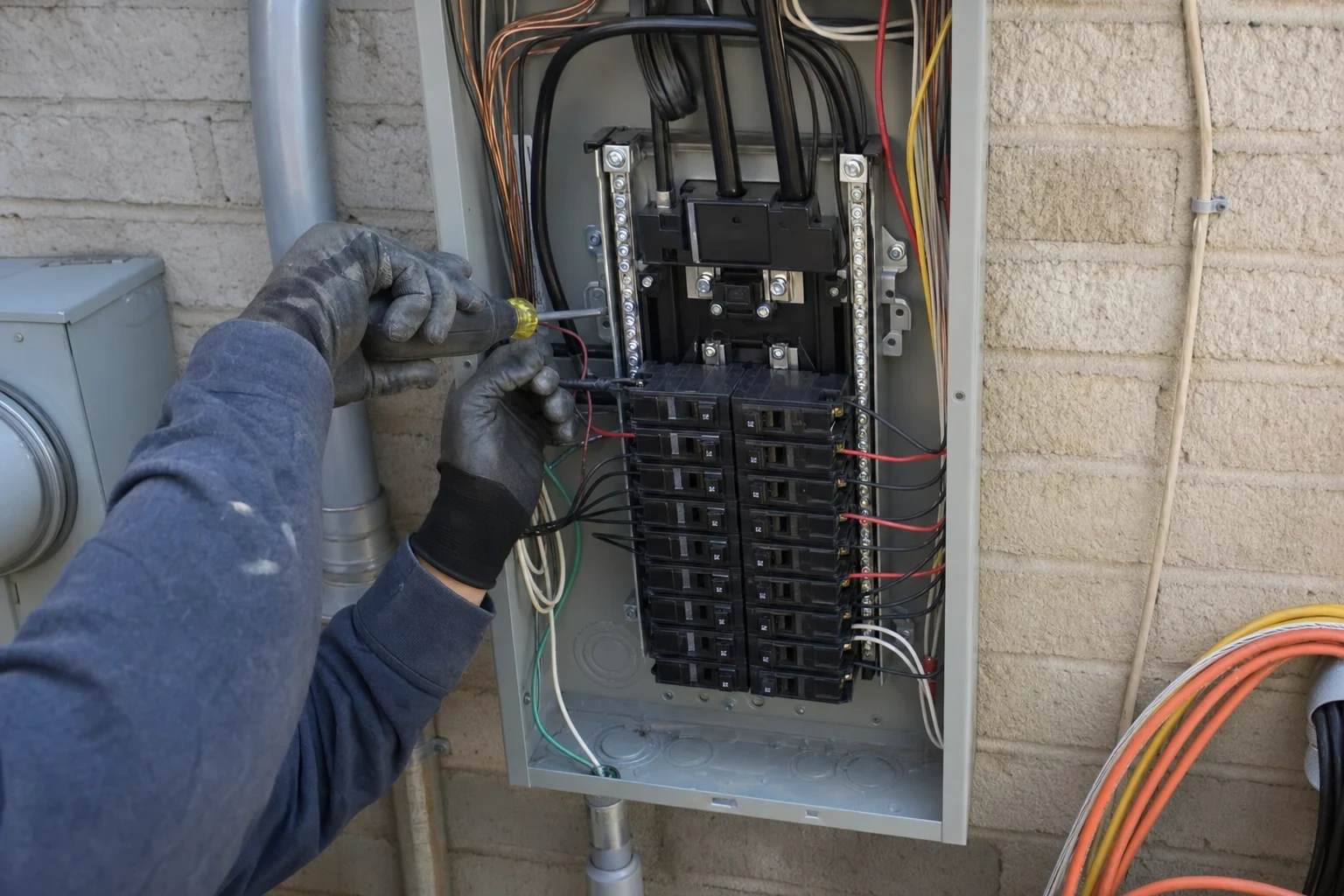
We mount whole-home surge protection at your electrical panel and check the grounding it relies on. The aim is to stop voltage spikes before they reach the circuit boards in your HVAC system, appliances and electronics, and to tell you plainly what a surge device can and can't do.
How whole-home surge protection works
A surge is a short spike in voltage, frequently over in a fraction of a second. Some arrive from outside, such as lightning striking nearby lines or the utility switching equipment. Many begin inside the house whenever a big motor like an AC compressor or well pump turns on or off. A single large surge can destroy a control board, and smaller repeated ones wear electronics out over time.
A whole-home surge protective device mounts on or next to your main panel. When voltage jumps, it sends the excess energy to ground before it travels through your branch circuits. Plug-in strips are still useful at a TV or computer, but they only guard what's plugged into them. The panel device protects hardwired equipment a strip can't, like the furnace, water heater controls, oven and garage door opener.
To be honest, no device can stop a direct lightning strike on your home. Surge protection is good at handling the much more common spikes that quietly cut short the life of costly equipment, and that counts here when spring storms move across North Texas.
What's included in a surge protection install
Panel and service check
We look over your panel, breakers and service entrance before recommending anything. If the panel itself has problems, we tell you first, since a surge device should go on equipment that is in good shape.
Grounding and bonding test
A surge device sends excess energy to ground, so it only works as well as your grounding does. We check the ground rods, the grounding electrode conductor and the bonding to water and gas lines, and point out anything loose, corroded or missing.
Right-sized surge device
We match the device to your panel and service size and mount it close to the panel with short, direct leads. Shorter leads let the device react faster, which is a detail that is easy to get wrong.
Coax and data line advice
Surges also travel in on cable, internet and antenna lines. We show you where those lines enter your home and whether they are grounded properly, so the back door is not left open.
Point-of-use recommendations
For home offices, gaming setups or medical equipment, we suggest where a quality plug-in protector adds a second layer. No upselling, just where it actually helps.
Signs your home could use surge protection
Electronics dying early
Chargers, routers or TVs failing well before they should can point to repeated small surges. It is worth checking before the next board goes.
An AC or appliance board failed
If a technician replaced a control board in your HVAC system, refrigerator or washer, a surge is a common suspect. A panel device helps protect the replacement.
Lights flicker when the AC kicks on
Brief dimming when large motors start tells us your circuits see regular voltage swings. We can also check whether a loose connection is part of the story.
You are adding costly equipment
A new EV charger, generator, battery system or smart appliances all rely on sensitive electronics. Adding surge protection at the same time makes sense.
Your panel is being replaced
Newer electrical codes call for surge protection when a service is upgraded, depending on the code your city has adopted. If you are planning a panel upgrade, we build it into the job.
How the visit goes
- 1
Talk it over by phone
You tell us what is going on, what equipment you are worried about and whether anything has failed recently. We book a service visit at a time that suits you.
- 2
Inspect and test
At your home we check the panel, the grounding system and where cable and data lines come in. You get a clear explanation of what we found before any work starts.
- 3
Agree on the scope
We walk you through the device we recommend and anything else that needs attention, like a loose ground clamp. You decide what goes ahead.
- 4
Install and verify
Power is shut off briefly while we mount and connect the device, usually at the panel outside or in the garage. We restore power, confirm the status indicator shows it is working and show you how to read it later.
What sets the price of surge protection
Most surge installs are simple, though every panel is set up a little differently. The cost depends mostly on your panel and on what we find when we check the grounding. We go over the scope and price by phone or during the visit before starting, so there are no surprises.
- Which device and what rating
- Panel devices differ in how much surge energy they absorb and how they show their status. We suggest the one that suits your service size, not the largest available.
- Room and condition at the panel
- An open slot near the main breaker makes the install easier. A full or worn panel may need rearranging or repair first.
- Grounding fixes
- Missing ground rods, corroded clamps or missing bonding add work. These repairs matter for your entire electrical system, not only the surge device.
- Doing it alongside other work
- Adding surge protection during a panel upgrade, generator install or EV charger install often costs less than a separate trip later, because we're already at the panel.
Common surge protection questions
Something not covered here? (682) 841-6649
With whole-home protection, do I still need surge strips?
For delicate electronics such as computers and TVs, a quality plug-in protector makes a smart second layer. The panel device takes down the big spikes, and the strip catches what's left at the outlet. Used together they cover more than either does alone.
Does this protect against a lightning strike?
Not a direct strike. That much energy is well beyond what any home device can absorb. Surge protection targets the far more frequent spikes from nearby strikes, utility switching and motors cycling in your home.
How long will a surge protector last?
The components inside wear slightly every time they absorb a spike. Most panel units have a light showing whether protection is still active. We show you where to check it, and if it changes after a big storm, we can replace the device.
How long does the install take?
A standard install without grounding problems usually fits in one visit, with the power off for just part of it. If we find grounding issues, we tell you how much time the fixes add before we start.
Can an older panel get surge protection?
Often it can, if the panel is sound and has space. If it's damaged, running hot or a type with a poor record, we'll tell you honestly and discuss a panel upgrade instead.
Protect the equipment you rely on
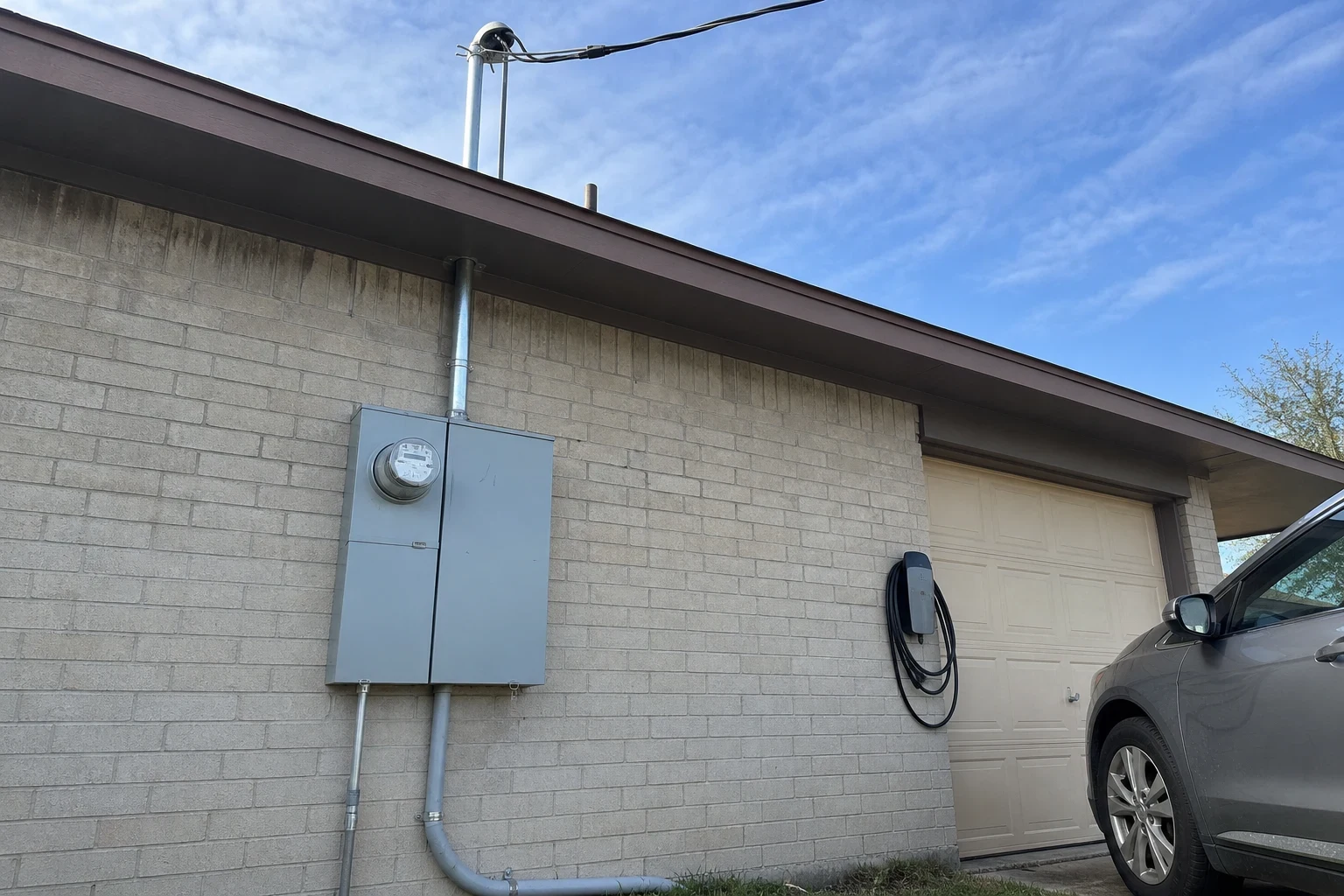
Tell us what you would hate to lose in the next storm, and we will check your panel and grounding and put the right device in place. Your neighbors' homes get the same careful work.