ServicesElectrical Repair
Electrical Repair for Kennedale Homes
A breaker that won't stay on, an outlet that quit or a light that flickers for no reason gets traced to its cause before we swap any parts. We explain it plainly, put the repair price in writing and do the work as carefully as we would in our own house.
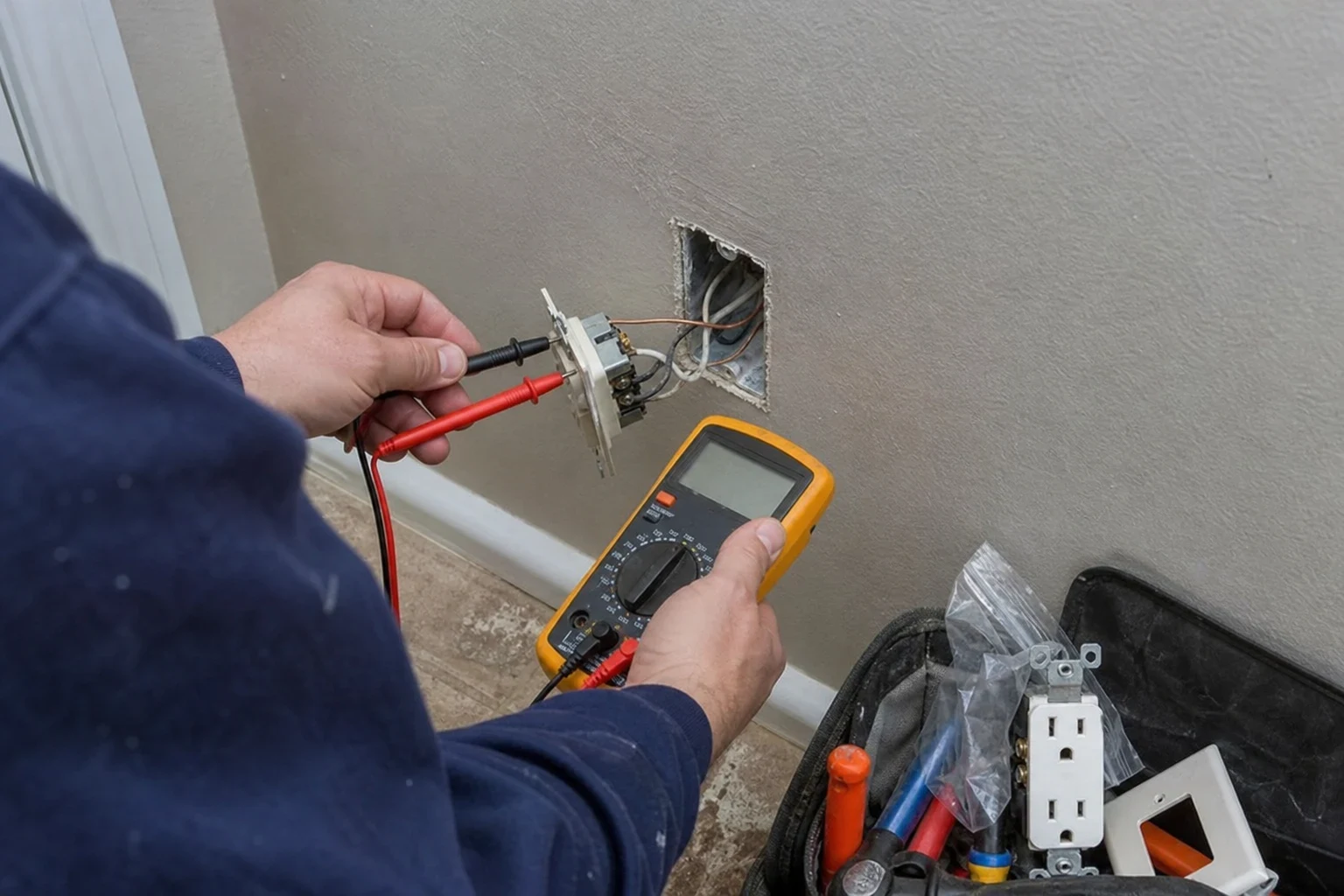
Every Repair Begins With Testing
Electrical trouble often shows up a long way from the actual fault. A bedroom outlet can go dead because of a loose connection two boxes back on the circuit. A breaker that trips each afternoon may be healthy while the circuit it protects is overloaded or has a bad splice. We use meters and a circuit tracer, open the boxes that matter and inspect the connections directly.
When we know what failed and why, we explain it simply and give you the price before starting the repair. A part that can be repaired and will hold gets repaired. A part that's worn out or unsafe gets shown to you, so the call is yours.
Long hot summers keep a heavy load on your home's circuits, and that's when weak connections tend to give out. Fixing it properly now stops a minor issue from becoming a scorched box or a damaged appliance down the road.
What Our Electrical Repair Covers
Tripping breakers and dead circuits
We find out whether the breaker, the wiring or something plugged in is causing the trip. Then we fix that cause instead of swapping breakers until the problem goes quiet.
Outlets and switches
Loose, cracked, warm or dead outlets and switches are replaced, and the wiring behind them is checked. That includes GFCI outlets in kitchens, bathrooms, garages and outside that will not reset or will not hold.
Flickering and dimming lights
Lights that flicker or dim when a large appliance starts can point to a loose neutral, a bad fixture connection or an overloaded circuit. We trace it to the source.
Burned or loose connections
Scorched wire ends, melted insulation and failed backstab connections are cut back to clean copper and remade properly.
Outdoor circuits and fixtures
Exterior outlets, porch and yard lights and weather-exposed boxes see sun, rain and heat. We repair damaged covers, corroded connections and failed fixtures outside your home too.
Signs Something Needs a Closer Look
The same breaker trips again and again
One trip can be a fluke. A breaker that trips repeatedly is telling you something about that circuit, and resetting it over and over only hides the cause.
A warm or discolored cover plate
Outlet and switch plates should never feel warm. Brown or tan marks around the slots usually mean heat at a loose connection inside the box.
Buzzing, crackling or a burning smell
Any of these near an outlet, switch, fixture or the panel is worth turning off at the breaker and having checked soon.
Lights dim when the AC or a big appliance starts
A brief, slight dip can be normal. A noticeable dim or flicker every time points to a loose connection or a circuit carrying more than it should.
A small shock or tingle
Feeling a tingle from a switch, appliance or faucet means current is going somewhere it shouldn't. Stop using it and have it tested.
What a Repair Visit Looks Like
- 1
You describe the problem
On the phone we ask what you're noticing, which rooms it affects and when it began. That way we bring the right parts and know where to start looking.
- 2
Testing comes before any opening
We check the panel, the circuits involved and the devices on them. If a wall or ceiling has to be opened to reach the fault, we show you where and why first and keep the hole as small as possible.
- 3
You hear the cause and see the price
We tell you what failed, show you the damaged part when possible and hand you a written repair price. The work waits until you approve it.
- 4
Repair, retest and clean up
Once fixed, the circuit is tested under load to make sure it holds. We take old parts and debris with us and go over what we did.
What Decides a Repair Price
We price each repair on what testing reveals, so you hear the number after we've tested and before we start. Swapping one outlet and chasing a hidden fault behind drywall are very different jobs. These factors move the price the most.
- How easily the fault shows itself
- A dead device is found fast. A fault that only appears under load can take longer testing to track down.
- Reaching the wiring
- Wires inside finished walls, a cramped attic or behind built-in cabinets take more time than an open garage wall or an easy-to-reach box.
- The parts involved
- A plain outlet is much cheaper than a GFCI or AFCI breaker, a new fixture or a run of new cable.
- What else turns up
- A burned connection can point to something bigger, such as an overloaded panel or wiring that isn't up to code. We tell you before adding anything, and you decide whether to deal with it now or later.
Common Repair Questions
Something not covered here? (682) 841-6649
What keeps tripping my breaker?
There are usually a handful of reasons. The circuit may be carrying more than it was designed for, often because a space heater or plug-in AC shares a line with the microwave. A wire or device may have a short or ground fault. Or the breaker may be old and releasing too early. Testing tells us which, so the repair fixes the source rather than the symptom.
Do most repairs get done in one visit?
Many do. Bad outlets, switches and loose connections are usually fixed on the spot since we keep common parts on hand. If the job calls for a special part or a permit, we explain what comes next and book the follow-up with you.
Will a repair need a permit?
Small like-for-like repairs often don't. If local rules call for a permit and inspection, we pull it and take care of the inspection, so it isn't left to you.
Can I keep using a circuit that's misbehaving?
If there's heat, a burning smell, sparks or a shock, switch that circuit off at the panel and keep it off until it's checked. A light that flickers now and then without heat or odor can usually wait for your visit, but don't put more load on it.
Will you say so if I need more than a repair?
Yes, and we'll show you the reason. If testing points to a tired panel or old wiring, we go over the options, including when a panel upgrade or whole-home rewiring is the better route, and the decision stays with you.
Let's Track Down the Problem
Describe what you're seeing, and we'll pick a time to test it, explain what's causing it and give you a price before any work begins.